

close
Choose Your Site
Global
Social Media
Views: 0 Author: Site Editor Publish Time: 2026-11-18 Origin: Site


Have you ever stood on a production floor when a massive extruder kicks on, only to watch the overhead lights dim and hear the breakers groan? In heavy commercial infrastructure, power stability dictates your operational success. Single-phase setups routinely fail under heavy demand. A well-specified Three Phase Power Transformer serves as the critical backbone for industrial electrical distribution. Many facility managers struggle to pinpoint exactly when their basic system becomes a liability. Whether you are scaling up a processing plant, upgrading local municipal networks, or installing high-demand machinery, selecting the right electrical foundation is non-negotiable. This guide breaks down the technical load considerations and efficiency advantages to help you make a data-driven upgrade decision.
Capacity Limits: Multi-phase systems effortlessly handle high-power demands that far exceed the thermal capacities and efficiency boundaries of standard single-phase setups.
Industrial Applications: Large machinery, heavy manufacturing equipment, and industrial HVAC systems inherently require the steady, continuous power delivery that only a robust architecture can provide.
Operational Stability: This power configuration reduces conductor material usage while delivering a consistent, vibration-free energy flow, which is vital for sensitive or high-torque equipment.
Equipment Choice: Solid-state technology offers a safe, low-maintenance, and eco-friendly option specifically tailored for strict indoor commercial installations.
Financial Impact: While initial procurement costs are higher, the long-term energy efficiency and enhanced reliability lead to significantly lower operational expenditures over the equipment lifespan.
To make informed decisions regarding infrastructure upgrades, one must first grasp the core mechanical differences between phase systems. A standard single-phase supply delivers alternating current through a single voltage waveform that drops to zero twice per cycle. In stark contrast, a multi-phase architecture utilizes three distinct alternating currents. Each current is precisely phase-shifted by 120 electrical degrees. Consequently, this overlapping configuration ensures that total energy delivery remains continuous and never drops to zero. The primary function of this equipment is to transfer electrical energy from one circuit to another, safely stepping the voltage up or down as needed. For instance, a facility might receive raw power at 13.8 kV from the utility, which the equipment then steps down to a usable 480V for internal distribution. At the heart of these units lies a sophisticated multi-legged magnetic core paired with specific winding configurations, most commonly Delta or Wye. These specialized windings maintain electrical equilibrium across the phases. By utilizing a shared magnetic core, the system minimizes raw material usage and maximizes transmission efficiency.
Looking at recent shifts across the electrical sector, the baseline for power consumption has fundamentally changed. The rapid expansion of electric vehicle charging hubs, hyper-scale data centers, and automated smart factories demands unprecedented energy density. Industry analysts note that as electrification replaces fossil fuels in manufacturing, the strain on existing local networks is skyrocketing. Facilities previously comfortable with standard commercial power now face severe bottlenecks. This transition forces plant engineers to rethink their infrastructure, moving away from outdated setups toward robust systems capable of handling continuous, heavy-duty cycles without thermal breakdown.
Not every building requires an industrial-grade overhaul. Deciding when a site crosses the threshold depends heavily on power density, which refers to the sheer volume of electrical load concentrated within a specific footprint. When a factory integrates automated assembly lines, demand rapidly outpaces standard supplies. Walk the production floor during peak shifts. Do electrical panels generate excessive heat? Do breakers trip routinely when industrial chillers start up? These empirical signs clearly indicate an overloaded network. Complex Industrial Projects, such as chemical processing plants and large-scale manufacturing facilities, inherently demand a robust supply. Upgrading evenly distributes the electrical burden, minimizing thermal stress on your copper conductors and providing vital headroom for future expansion.
One of the most compelling reasons to overhaul an electrical network is the presence of substantial Motor Loads. In manufacturing, electric motors act as the muscle. They drive massive fluid pumps, heavy-duty compressors, and automated conveyor belts. Single-phase power produces a pulsating magnetic field. This pulsation introduces severe mechanical vibration and efficiency losses in heavy applications. Specifically, the 120-degree phase shift generates a naturally rotating magnetic field. Large induction motors become entirely self-starting. You eliminate fragile starting capacitors that frequently fail on the factory floor. More importantly, this rotating field delivers constant torque to the motor shaft. Consistent torque translates directly to smoother operation and drastically reduced mechanical wear on bearings. By ensuring stable current delivery, you directly safeguard your most critical mechanical assets from premature degradation.
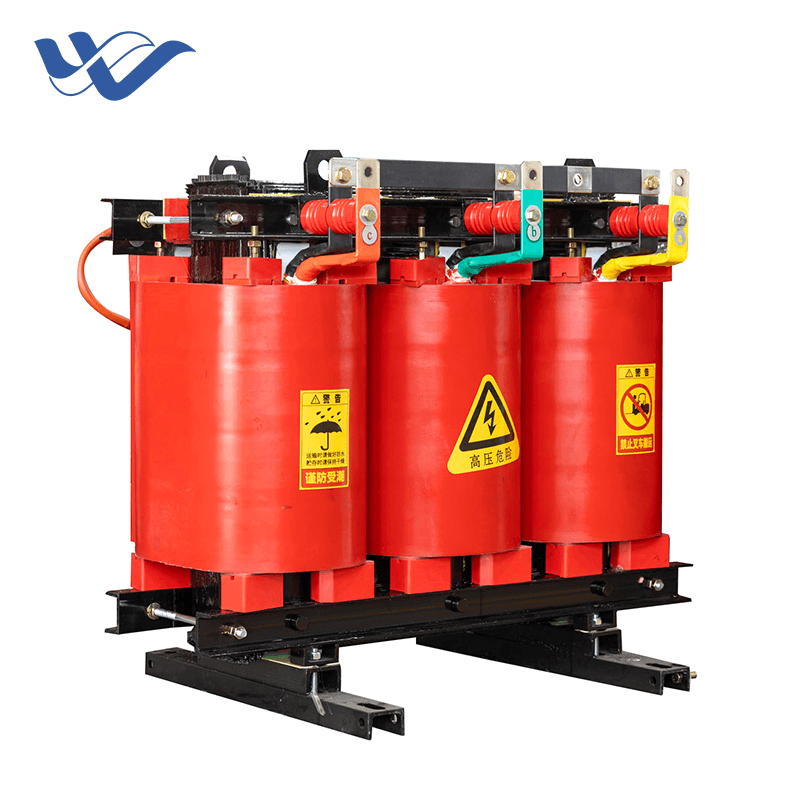
When specifying equipment for an indoor upgrade, the cooling medium is a paramount safety consideration. Historically, liquid-filled units utilizing mineral oil were the standard. Modern engineering has pushed solid-state insulation to the forefront. For contemporary commercial high-rises and sensitive manufacturing environments, a Dry Type transformer is often the strictly mandated choice. Unlike traditional oil-filled models, these advanced units rely on ambient air circulation and solid cast-resin materials. This entirely eliminates flammable dielectric liquids. From a practical standpoint, you face zero risk of toxic oil spills and a virtually non-existent fire hazard. Facility managers no longer need to construct costly secondary containment vaults. Let us look at real-world specifications for high-demand applications. High-quality 10kV cast resin units typically feature capacities ranging from 30kVA up to 2500kVA, utilizing F or H class insulation. The high-voltage windings are vacuum-cast with epoxy resin, ensuring low partial discharge, often less than 10pC. This robust construction provides excellent resistance to short circuits and thermal shocks. Routine maintenance drops drastically. Visual checks and periodic vacuuming of dust from the ventilation grilles keep the system running at peak efficiency.
Operational Metric | Standard Single-Phase System | Industrial Three-Phase System |
|---|---|---|
Power Delivery | Pulsating, drops to zero twice per cycle | Continuous, overlapping waveforms never drop to zero |
Motor Torque | Inconsistent, prone to mechanical vibration | Smooth, constant torque reducing bearing wear |
Conductor Efficiency | Requires heavier gauge wire for equal power | Uses less copper/aluminum for the same power output |
Best Application | Light commercial, residential, fractional motors | Heavy manufacturing, large HVAC, automated robotics |
Integrating a high-capacity facility with the local utility Grid requires meticulous attention to power quality. A massive industrial operation is not an isolated island. Its electrical behavior directly impacts the broader external network. Utilities strictly monitor industrial consumers for poor power factor and harmonic compliance. They frequently impose steep financial penalties for violations. Proper sizing and phase balancing are imperative to sustain a stable voltage profile. Unbalanced loads trigger excessive neutral currents, leading to localized overheating and severe voltage sags. Additionally, modern factories are packed with variable frequency drives and advanced robotics. These devices generate erratic electrical frequencies that degrade power quality. Selecting equipment engineered with harmonic mitigation capabilities suppresses electrical interference, protecting your internal hardware and the integrity of the external network.
Facility upgrades demand rigorous financial justification. The upfront capital expenditure for installing a multi-phase system, complete with associated switchgear, is undeniably higher than a basic setup. Nevertheless, the long-term return on investment is substantial for high-demand operations. A primary driver of this financial return is the measurable reduction in energy transmission losses. Because the system utilizes three current-carrying conductors instead of two to deliver the exact same power output, the current per conductor is significantly lower. According to Joule's Law, thermal transmission losses are proportional to the square of the current. Curtailing the amperage per line drastically reduces copper heat losses. Over a long lifecycle, this improved efficiency directly shrinks monthly utility bills. Unplanned downtime in a manufacturing plant bleeds thousands of dollars per hour. Robust stability prevents nuisance electrical tripping, ensuring that operations run smoothly and profitably.
Adherence to stringent regulatory frameworks is absolutely non-negotiable in heavy electrical engineering. Compliance with international safety standards, such as those established by the IEC and ANSI, protects both personnel and property. Achieving compliance extends beyond purchasing certified hardware. Proper deployment requires meticulous attention to grounding protocols, clearance distances, and environmental controls. Ensuring adequate ambient ventilation is a critical requirement to prevent the equipment from exceeding safe temperature limits. Failure to maintain optimal cooling degrades insulation materials and leads to catastrophic short circuits. Partnering with reputable manufacturers ensures your final installation is unequivocally safe and fully compliant.
Choosing the right electrical equipment is the bedrock of operational success. Transitioning to a multi-phase architecture provides the robust, consistent energy delivery required to support heavy operations and complex machinery. By upgrading your system, you effectively eliminate costly power bottlenecks, reduce mechanical wear, and improve long-term scalability. Evaluate your specific load requirements meticulously before breaking ground on your next installation. Ready to stabilize your facility's power network and eliminate costly downtime? Explore high-performance, compliant solutions tailored to your specific industrial demands. Visit https://www.hytransformers.com to find the exact industrial-grade equipment required to safeguard your operations for decades to come.
If your facility utilizes large industrial machinery, heavy heating elements, or commercial HVAC systems, a single-phase system is likely insufficient. Practical indicators such as frequent voltage drops, flickering lights when heavy equipment starts, or overheating electrical panels signal that an upgrade is necessary to handle the load securely and efficiently.
The standout advantage is superior fire safety and environmental protection. Because they utilize solid cast-resin insulation and ambient air cooling instead of flammable mineral oils, they carry zero risk of liquid leaks and are self-extinguishing. This makes them the mandated choice for strict indoor, commercial, and sensitive manufacturing environments.
Yes, single-phase loads can be powered by connecting the load across one phase and the neutral conductor. However, facility engineers must carefully balance these single-phase loads evenly across all three phases to prevent voltage instability and premature equipment degradation.
Absolutely. By transmitting power across three conductors, the system reduces the amperage per line compared to a single-phase system delivering the exact same total power. This reduction in current exponentially decreases heat transmission losses in the wiring, resulting in measurably higher overall energy efficiency.
Solid-state, air-cooled units require significantly less maintenance than their oil-filled counterparts. Routine upkeep typically involves annual visual inspections, verifying the integrity of electrical connections, and vacuuming the ventilation grilles to remove dust accumulation that could otherwise impede thermal dissipation.
When properly specified, installed in a well-ventilated environment, and subjected to routine maintenance, a high-quality cast resin unit can easily operate reliably for 20 to 30 years. Keeping the core temperatures within designated limits is the key to maximizing this operational lifespan.
While they are designed to handle minor imbalances, severe asymmetrical loading across the phases forces excessive current through the neutral wire and causes localized overheating in the transformer windings. Plant engineers must continuously monitor and distribute single-phase loads as evenly as possible to maintain system integrity.


